
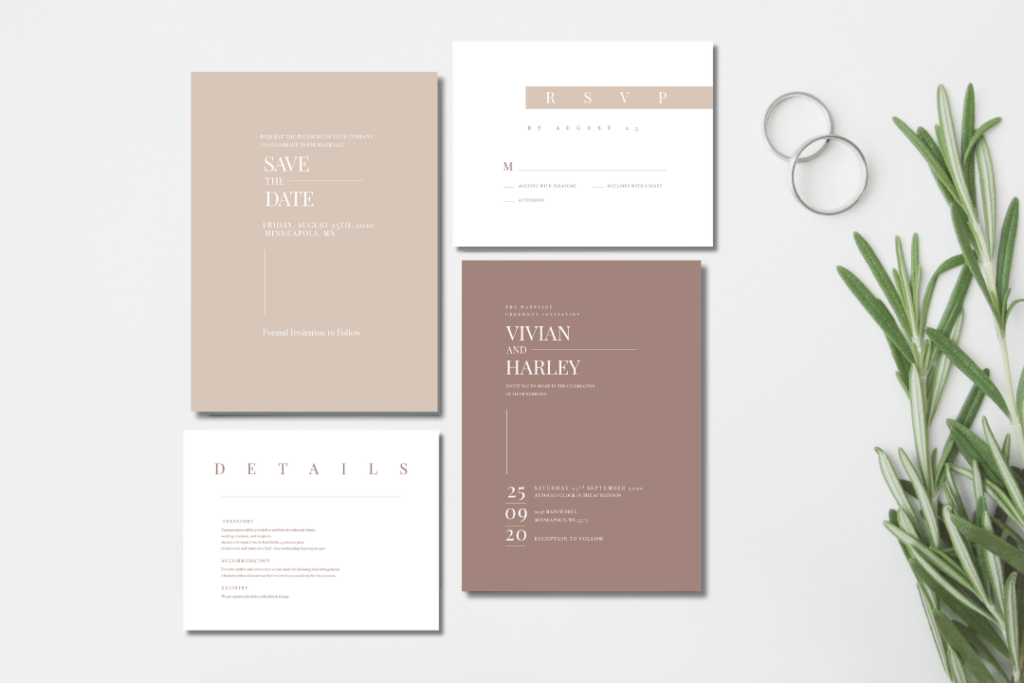
Planning your wedding invitations can feel deceptively simple at first, until timelines, printing methods, and vendor deadlines start stacking up. One of the most common mistakes couples make is underestimating how long semi-custom and fully custom stationery actually takes.
This guide was created to give you clarity before stress sets in. You’ll learn exactly when to start, how specialty printing like letterpress and foil affects timing, and how to plan your RSVP date so your vendors get accurate counts without last-minute chaos.
If you’re feeling unsure about when to order, what printing method makes sense, or how early invitations really need to go out, this timeline will walk you through it step by step.
Why Your Invitation Timeline Matters
Wedding invitations aren’t just paper. They are a coordinated process involving design, proofing, production, printing, assembly, and mailing. When you add specialty processes like letterpress, foil stamping, embossing, or custom die‑cutting, timelines expand quickly.
A well‑planned invitation timeline ensures:
- No rush fees or last‑minute compromises
- Enough time for custom design revisions
- Accurate guest counts for your vendors
- A calm, organized planning experience
The Big Picture Timeline (At a Glance)
- Fecha de Boda
- RSVP Deadline: 4–6 weeks before the wedding
- Invitations Mailed: 8–12 weeks before the wedding
- Invitation Ordering Begins: 6–9 months before the wedding
Let’s break this down step by step.
6–9 Months Before the Wedding: Start the Invitation Process
This is the ideal window to begin working with a stationer for semi‑custom or fully custom invitations.
What Happens During This Phase
Initial consultation and design direction
Paper selection and print method decisions
Custom illustration or monogram development
First design proofs and revisions
Digital printing is the go-to choice for many couples who want wedding invitations that are both affordable and stylish. This process uses advanced printers to apply ink directly to paper, which allows for vibrant colors and intricate designs. Digital printing works beautifully for wedding invitations templates, as it is efficient and cost-effective for both small and large quantities. Prices usually range from $1 to $4 per invitation set, depending on paper quality and add-ons. If you want a budget-friendly option with plenty of room for personalization, digital printing is a wonderful place to begin.
Why So Early?
Custom stationery isn’t a one‑click order. Design alone can take several weeks, especially if you want something truly personal. Starting early gives you space to explore options without feeling rushed.
Best for:
- Custom or semi‑custom designs
- Letterpress, foil, embossing, or layered invitations
- Couples who want a cohesive stationery suite
5–6 Months Before the Wedding: Finalize Design Details
By this point, your design direction should be locked in.
What should be Finalized:
- Invitation wording and etiquette
- Color palette and paper selections
- Print methods and embellishments
- Envelope style and liner designs
This is also when your stationer prepares final production files and sends everything to print.
Understanding Printing Timelines (This Is Where Time Adds Up)
Not all printing methods are created equal. Specialty printing requires longer production windows.
Typical Production Timelines
- Digital Printing: 1–2 weeks
- Foil Stamping: 3–4 weeks
- Letterpress: 3–5 weeks
- Embossing or Die‑Cutting: 3–5 weeks
- Multiple Processes Combined: 5–7+ weeks
These timelines do not include:
- Proofing rounds
- Shipping from printers
- Assembly and addressing
3–4 Months Before the Wedding: Assembly & Addressing
Once invitations are printed, they still need to be assembled.
This includes:
- Folding and inserting cards
- Adding vellum wraps, wax seals, or ribbon
- Envelope addressing (hand‑written or printed)
- Quality checks and final counts
Custom assembly can take 1–2 weeks, especially for intricate invitation suites.
8–12 Weeks Before the Wedding: Mail Invitations
This is the sweet spot for mailing wedding invitations.
Why So Early?
- Mail delivery times vary
- Guests need time to open, read, and respond
- Out‑of‑town guests may need to book travel
- Quality checks and final counts
Sending invitations 2–3 months before the RSVP date allows plenty of breathing room.
RSVP Deadline: 4–6 Weeks Before the Wedding
why this matters
- Caterers require accurate guest counts
- Rental companies finalize quantities
- Seating charts and place cards are created
- Quality checks and final counts
This buffer gives you time to follow up with late responders without panic.
Timeline Example (October Wedding)
- List Item #1
- List Item #2
- List Item #3
- Mail delivery times vary
- Guests need time to open, read, and respond
- Out‑of‑town guests may need to book travel
- Quality checks and final counts
- January–March: Book stationer, start design
- April: Finalize invitation design and wording
- May–June: Printing and production
- July: Assembly and addressing
- Early August: Mail invitations
- Early September: RSVP deadline
- Mid‑October: Wedding day
Pro Tips for a Smooth Invitation Timeline
- Choose your print method early
- Order extra invitations for keepsakes
- Build buffer time for proofs and revisions
- Do not wait on guest addresses to start design
Want This Timeline as a Printable Guide?
If you’d like to keep this timeline handy or share it with your planner or partner, you can download a printable Wedding Invitation Timeline PDF with all the key dates and reminders laid out clearly.
This guide is perfect if you’re:
- Planning semi-custom or custom invitations
- Considering letterpress, foil, or specialty printing
- Unsure when to set your RSVP deadline
Download the Wedding Invitation Timeline PDF and plan your stationery with confidence.
If you’re ready for a more personalized experience, you can also inquire about custom wedding stationery design, where I’ll create a timeline tailored specifically to your wedding date, guest count, and print preferences.
- Mail delivery times vary
- Guests need time to open, read, and respond
- Out‑of‑town guests may need to book travel
- Quality checks and final counts